
A Season Where Everything Changes
When the lights go out at the Australian Grand Prix on March 8th, the grid will look fundamentally different:
- Completely new aerodynamics — active aero, smaller cars, radically different silhouettes
- 11 teams — Cadillac joins (the first new entry since Haas in 2016), Audi takes over Sauber
- 22 drivers — Norris as champion, Hamilton in red at Ferrari, Lindblad as the only rookie, Bottas and Perez at Cadillac
Every team has new liveries. Ferrari's SF-26 has more white. Cadillac and Audi bring entirely new color schemes. For photographers, everything you knew about identifying cars at a glance needs to be relearned from scratch.
The FIA's AI Revolution: ECAT
The FIA has quietly built one of the most sophisticated AI systems in professional sports — and it goes live this season.
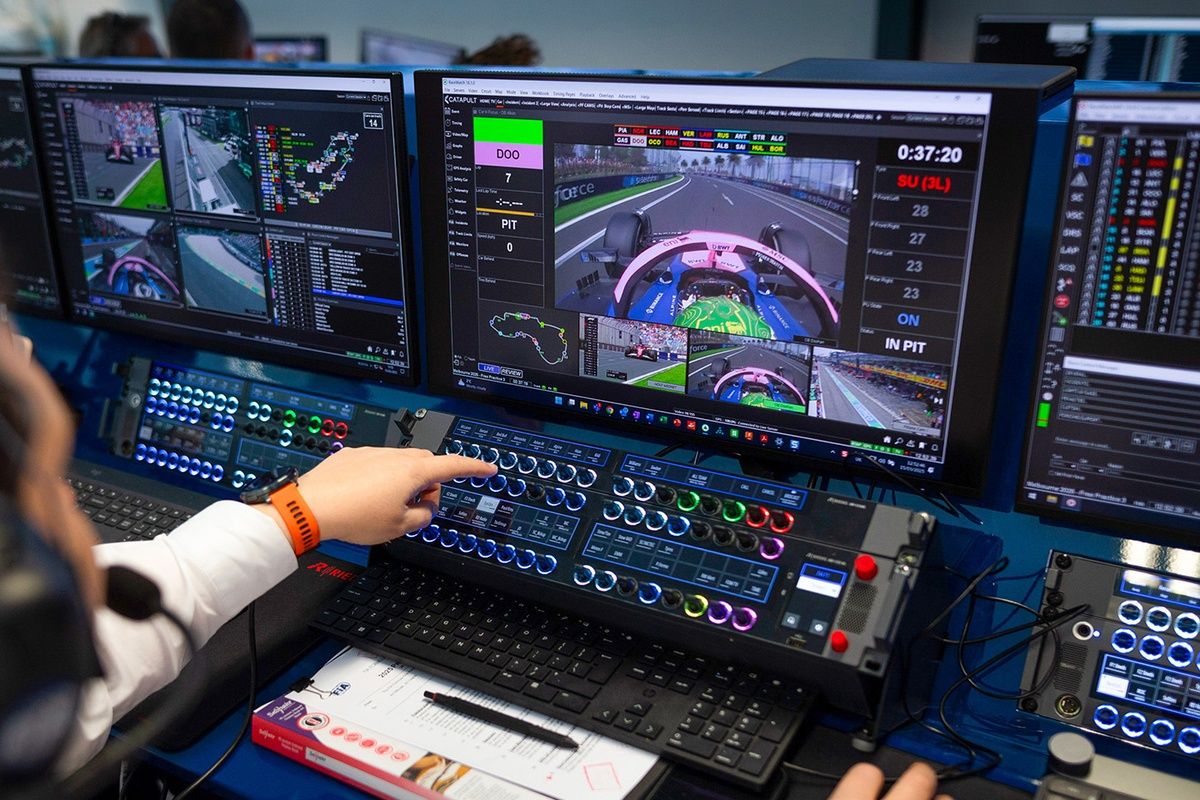 *FIA Race Control running RaceWatch — Photo: FIA*
At the 2023 Austrian Grand Prix, stewards manually reviewed over 1,000 track-limit violations in a single weekend. The FIA's answer: ECAT (Every Car All Turns) — a computer vision system integrated into RaceWatch that combines trackside cameras, GPU-accelerated video processing, positioning data, and geofencing to monitor every car at every corner.
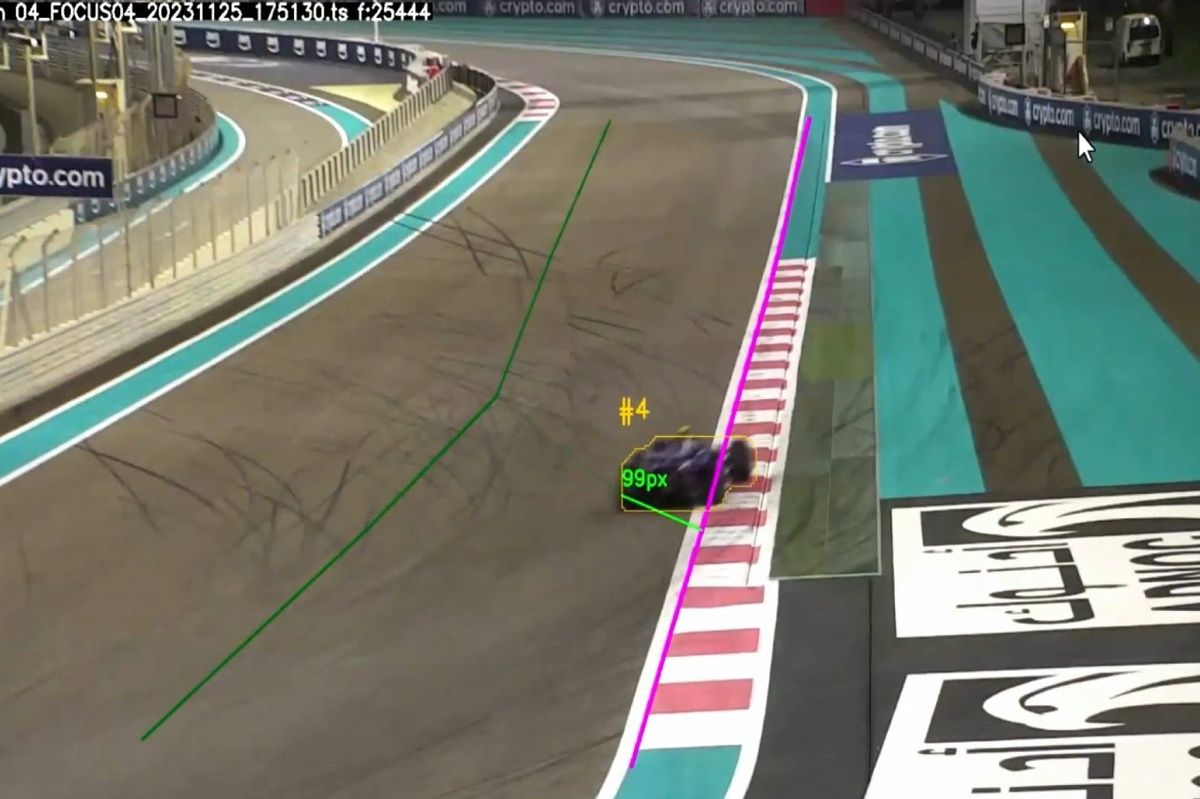 *ECAT detecting car #4 near the track boundary with pixel-level precision — Photo: FIA*
The result: 95% of cases resolved without human involvement. The system creates a real-time "digital twin" of the track, cross-referencing positioning data, sector times, and racing lines to flag violations — even at corners without camera coverage.
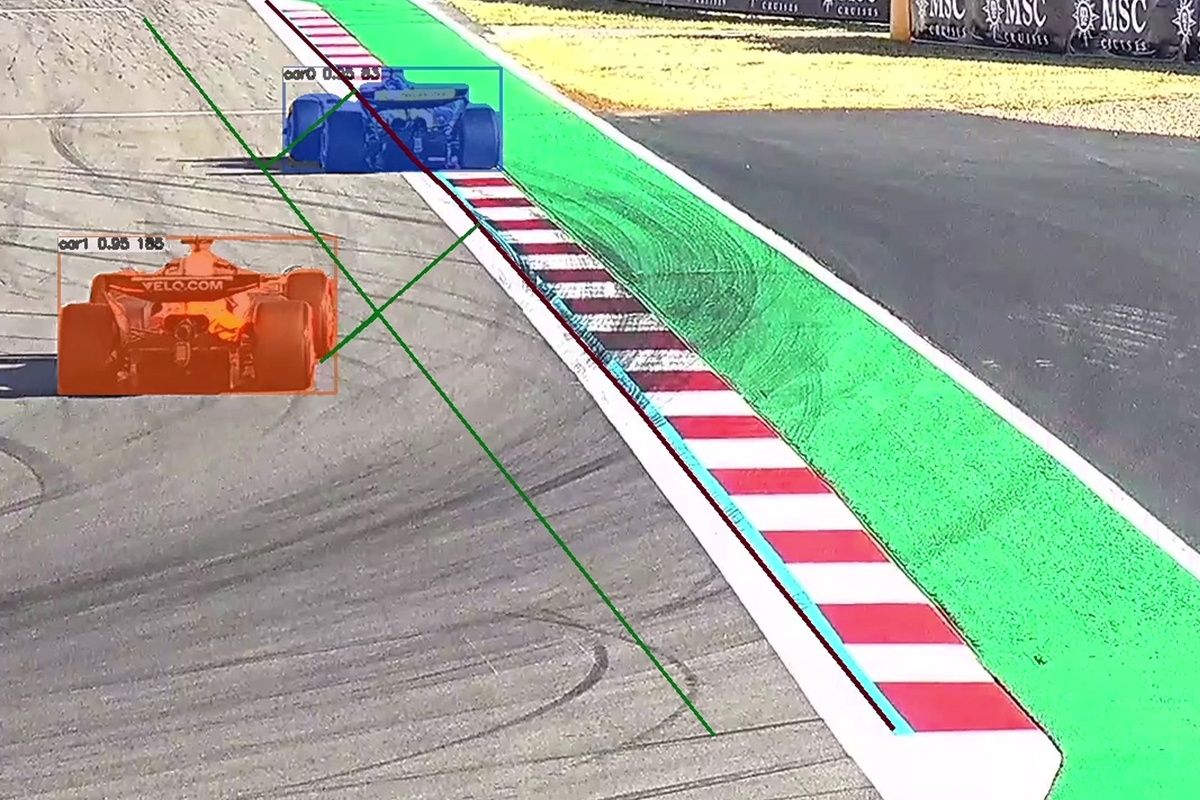 *AI tracking multiple cars with confidence scores — Photo: FIA*
The underlying technology — computer vision, pattern recognition, real-time object detection — is the same that powers AI photo tagging. ECAT monitors live video for rule enforcement. RaceTagger analyzes still images for identification and metadata. Same AI foundations, different application.
Why This Matters for Photographers
A typical F1 weekend produces 2,000-5,000 photos per photographer. In a reset season, manual tagging gets harder:
- New car shapes — visual cues you've internalized over years are gone
- New liveries — color shortcuts ("that orange is McLaren") may not be reliable until you've memorized the new schemes
- New driver/team combos — Hamilton's #44 on a Ferrari, Perez's #11 at Cadillac. Your muscle memory for "number + color = driver" needs a full reset
- New sponsors — the text on every car has changed, making ambiguous photos harder to resolve
A photographer tagging 500 photos/hour last season might drop to 300/hour in the opening rounds — not from lack of skill, but because the visual reference library in your head is outdated.
AI Tagging Solves the Reset Problem
This is exactly where AI-powered tagging delivers the most value.
AI doesn't have muscle memory to unlearn. Load an updated 2026 entry list CSV, and RaceTagger starts fresh with accurate data. No confusion about which blue belongs to which team.
OCR reads numbers, not liveries. If the race number is visible, it gets read — regardless of how different the car looks from last year. In a reset season, this makes AI tagging more reliable than human identification.
Scale handles the volume. 3,000+ Melbourne photos processed in 20-30 minutes at 85-95% accuracy. At the Ferrari Finali Mondiali at Mugello, a photographer achieved 98% detection accuracy — completing a full day of tagging during a lunch break.
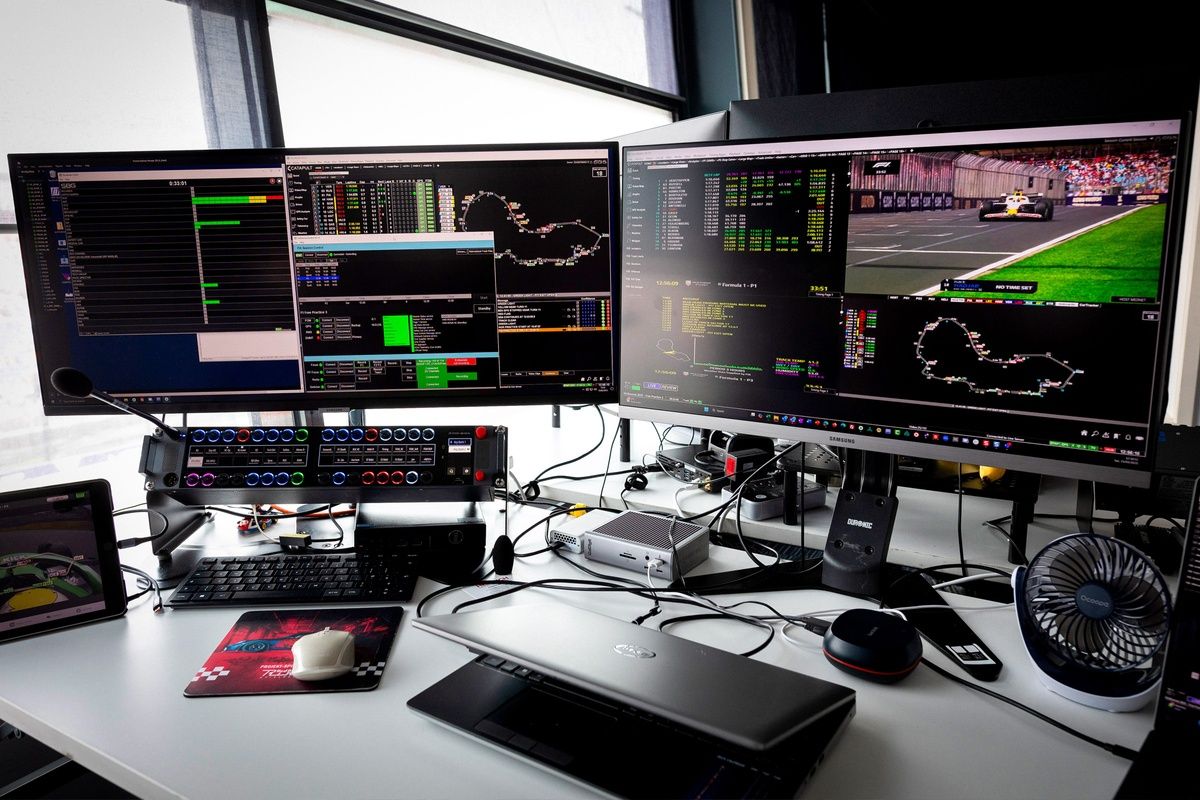 *FIA stewards workstation with AI-assisted monitoring — Photo: FIA*
The Big Picture
AI is already everywhere in F1 2026:
| Application | What AI Does | Speed |
|---|---|---|
| FIA ECAT | Detects track limit violations | Real-time |
| Team Strategy | Processes telemetry for decisions | Real-time |
| Broadcast | Generates graphics and overlays | Real-time |
| Photo Tagging | Identifies cars, writes metadata | 20-30 min / 3,000 photos |
When the cars you're photographing are being monitored by computer vision at 300km/h, the same technology helping you tag those photos afterward isn't a luxury — it's the natural evolution.
The photographers who adapt fastest will deliver first. In a market where speed matters as much as quality, that's the edge that counts.
RaceTagger is available for macOS and Windows. Start your free trial and process your first 1,500 photos with AI-powered race number detection.
Deep Dive Guides
- How to Tag WEC/F1 Photos with AI — complete endurance racing workflow
- Same-Day F1 Photo Delivery — how AI cuts tagging from 8 hours to 15 minutes
- Batch Processing F1 Photos Under Wire Service Deadlines
- CSV Integration in F1 Photography — automate driver matching
- Metadata Tagging in F1 Photography — IPTC/XMP best practices